THANK YOU FOR SUBSCRIBING

Auto Tech Outlook Weekly Brief
Be first to read the latest tech news, Industry Leader's Insights, and CIO interviews of medium and large enterprises exclusively from Auto Tech Outlook
The shift to software-defined vehicles (SDVs) is changing how cars are built and how they operate, placing perception systems at the center of safer, smarter and more autonomous mobility. Consumers expect intelligent safety features and advanced driver assistance, while regulators and manufacturers continue pushing for fewer crashes and greater situational awareness. Together, these demands are accelerating the adoption of sophisticated sensing technologies capable of performing reliably across a wide range of driving conditions. MicroVision develops perception technologies that help vehicles understand and navigate complex environments with greater accuracy and confidence. Through its automotive lidar platform and sensor fusion capabilities, the company helps automakers and mobility providers enhance safety, improve environmental awareness and support the transition to higher levels of driving automation. Advancing Automotive Perception through Sensor Fusion Automotive perception systems must process increasing volumes of information while maintaining accuracy across diverse operating conditions. Urban environments, different weather and unpredictable traffic patterns create challenges that demand more sophisticated sensing capabilities. MicroVision addresses these requirements through a lidar-first approach designed to enhance how vehicles perceive their surroundings. Its MAVIN lidar platform combines high-resolution sensing, long-range detection and dynamic field-of-view capabilities to support advanced driver assistance systems and automated driving applications. Sensor fusion remains central to this strategy. MicroVision integrates lidar data with complementary inputs from cameras, radar and vehicle systems to create a more comprehensive understanding of the driving environment. Such an approach improves perception accuracy while helping mitigate the limitations associated with individual sensor technologies. MicroVision develops and validates its solutions across a wide range of real-world operating conditions, helping ensure reliable performance in complex driving environments. Furthermore, the company embraces the importance of flexible perception architecture. Adaptable sensing configurations and software-driven enhancements allow automakers to tailor capabilities to specific vehicle segments, performance requirements and regional regulations. This adaptability supports efficient deployment across diverse mobility applications. Turning Data into Awareness Reliable perception requires more than advanced sensing hardware. Vehicles must be able to interpret what their sensors detect, identify meaningful patterns and make informed decisions in real time. MicroVision combats this challenge with its software-defined perception that converts sensor input into intelligence about your surroundings in real time. The architecture supports quick data analysis and object classification so that the vehicles can respond effectively to changing road conditions.
Modern diagnostics has outgrown the basic scan tool. For fleets, shops, OEMs and service providers, the challenge is bigger than reading a fault code. Vehicles and equipment now rely on connected systems, advanced modules, emissions controls, safety technology and software-driven components. One missed issue can mean longer downtime, a technician stuck mid-repair or a customer sent back to the dealer when the work should have stayed in-house. Triad Diagnostic Solutions was built for that pressure. It helps fleets, OEMs and repair shops take control of diagnostics with dealer-level tools, hands-on support, training, remote programming, tool management and practical implementation help. Triad supports platforms from Jaltest, Nexiq and Autel, but the difference lies behind the tools: a team that understands how diagnostic delays affect uptime, revenue, technician confidence and customer trust. “Diagnostic tools are only valuable if your team can use them confidently,” said Greg Reimmuth, CEO of Triad Diagnostic Solutions. “Our job is to make sure the tool fits the operation, the technicians know how to use it and support is there when the job gets complicated.”


Automotive recycling faces a structural limitation in how mixed metal streams are processed and valued. End-of-life vehicles generate complex material outputs, yet traditional systems struggle to separate and upgrade these materials efficiently, leading to value loss and dependence on export markets. Sortera Technologies addresses this challenge by treating metal recovery as both a sorting and data problem. Its approach focuses on analyzing and separating materials at a granular level to deliver outputs tailored to specific end markets. Reframing Metal Recovery through Data and Precision A key issue in the automotive recycling value chain is the inability to differentiate between materials that require distinct chemical compositions for different applications. Aluminum, for example, exists in multiple forms that serve separate end markets but are often processed together. Sortera Technologies addresses this by implementing piece-by-piece analysis of scrap materials. Its system collects data on each fragment, including visual characteristics and chemical composition, enabling customized separation aligned with end-use requirements.
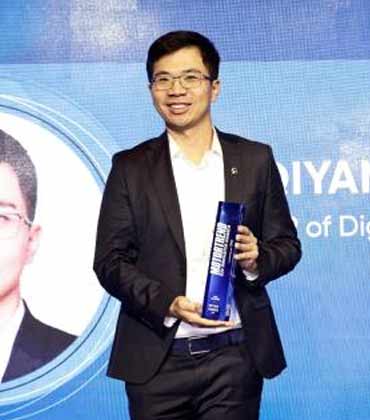
Qiyan Wang, VP of Engineering - Digital Systems and Yueqiang Cheng, Director, Principal Security Architect, Head of Security Research, NIO [NYSE: NIO]

Michael Spliedt, Senior Engineering Manager, Yanfeng Global Automotive Interiors
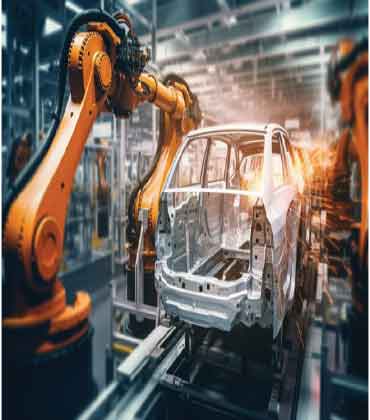
Reese Blalock, Director of Automotive Technical Education and Development, AAMCO Transmissions and Total Car Care

David Bailey, Senior Sales Development Manager, Edmunds
EV charging solutions are vital for clean transportation, requiring infrastructure, efficiency improvements, and collaboration among various stakeholders for successful expansion.
Intelligent dealership platforms improve executive decision-making through practical automation, stronger governance, better workflow alignment and sustainable operational performance.
Data Driven Insights Improving Automotive Efficiency
Our cover story features MicroVision [NASDAQ: MVIS], recognized as the Top Automotive Perception Solutions Provider 2026. As software-defined vehicles continue to evolve, MicroVision is helping automakers build safer and smarter mobility platforms through its advanced lidar technology, sensor fusion capabilities and real-time perception software. By enabling vehicles to interpret complex environments with greater accuracy, the company is strengthening the foundation for the future of intelligent transportation.
We also celebrate Sortera Technologies, named the Top AI Driven Automotive Metals Recycling Technology 2026. Through its combination of artificial intelligence, multi-sensor analysis and precision sorting, Sortera is transforming automotive scrap into a valuable domestic resource. Its data driven approach is improving material recovery, strengthening supply chain resilience and supporting a more circular automotive economy.
We also recognize Triad Diagnostic Solutions, recipient of the Top Automotive Diagnostic Technology 2026 award. Through its combination of dealer-level diagnostic platforms, technician training, remote programming and hands-on technical support, Triad helps fleets, repair facilities and OEMs reduce downtime, improve repair accuracy and strengthen operational performance.
This issue is further enriched by insights from Sacha Porges, Global Director of Customer Quality & Programs at GKN Automotive, who explores how augmented reality is improving quality, training and manufacturing performance. Ray Polentz, Vice President of Supply Chain and Logistics at Yokohama Tire Corporation, shares how strategic investments in automation, SAP and logistics technologies are creating more agile and future-ready supply chains.
We invite readers to explore this issue and discover how technology leaders are redefining automotive innovation through smarter mobility, sustainable operations and data-driven performance.
 Copyright © 2026 AutoTech Outlook. All Rights Reserved | Privacy Policy | Subscribe | Sitemap | Newsletter| Feedback Policy | Editorial Policy
 ![Microvision [NASDAQ: MVIS]: Redefining Automotive Perception for Software-Defined Vehicles](https://www.autotechoutlookapac.com/newstransfer/upload/44-l71rt-.jpg "Microvision [NASDAQ: MVIS]: Redefining Automotive Perception for Software-Defined Vehicles")