 Tasso Roumeliotis, Founder and CEO
Modern dealership service departments operate less like retail counters and more like hospitals, where multiple specialists coordinate around a shared operational outcome. Service advisors, technicians, parts teams, BDCs, and managers must align in real time around vehicles customers depend on daily. Without infrastructure built for this level of complexity, communication becomes the first point of failure. Calls go unanswered, response delays accumulate, and industry data shows that dealerships take an average of nearly 23 hours to respond, with roughly half of inquiries missed. This breakdown quickly erodes customer trust and reflects the limits of running complex operations on tools designed for simpler workflows.
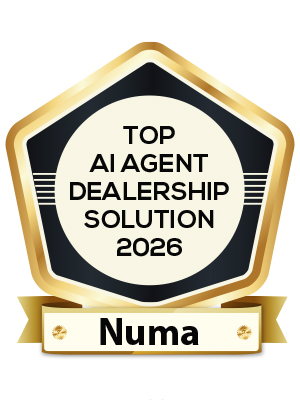
Numa is the result of recognizing dealership communication as an operational systems problem, not a staffing or effort issue. Built to support how dealerships actually operate today, the platform embeds AI at the core of its communication layer, treating customer operations as an intelligence-driven workflow that replaces fragmented manual handoffs. By unifying calls, messages, and internal coordination in a single environment, Numa gives teams the shared context and real-time visibility needed to manage growing operational complexity.
“Customer experience in a dealership is a team sport. When teams aren’t connected, customers feel it. Numa brings every call, message, and handoff into one system so teams can work together and customers never fall through the cracks,” says Tasso Roumeliotis, founder and CEO.
Fixing Dealership Communication at the Structural Level
How does Numa stabilize inbound demand and dealership communication workflows?
Numa addresses four key pressures on dealership performance: inbound overload, fragmented coordination, advisor overload, and limited managerial visibility. The company’s platform stabilizes inbound customer engagement by ensuring every call is answered with full operational context. Its context-aware inbound Voice AI continuously absorbs demand at the entry point, using customer history, vehicle status, prior interactions, and staff availability to maintain continuity. This directly addresses inbound overflow that now consumes much of the BDC’s time and slows response.
-
Customer experience in a dealership is a team sport. When teams aren’t connected, customers feel it. Numa brings every call, message, and handoff into one system so teams can work together and customers never fall through the cracks.
How does a unified communication layer improve coordination across dealership teams?
Fragmented coordination between departments is solved through Numa’s Smart Inbox, which creates a unified communication layer across the dealership, giving teams a single source of truth for customer interactions. By consolidating calls, messages, and internal notes, the platform improves execution and resolves collaboration gaps that emerge when teams rely on disconnected tools.
The Smart Inbox also introduces real-time task prioritization, converting fragmented activity into a structured workflow. Service advisors no longer rely on memory or constant interruption to manage their workload. Instead, they receive prioritized tasks and guided follow-ups that reflect real customer urgency, enabling them to stay responsive as they move between customers, technicians, and parts teams.
At the leadership level, Numa provides continuous operational visibility into response patterns, bottlenecks, and workload distribution. Managers can detect early signs of escalating frustration, or heat cases, and intervene before they affect CSI or revenue. Deployments report heat-case reductions of up to 90 percent, with approximately 40 percent of recovered customers returning within six months.
Operational Results and Future
What measurable dealership performance improvements emerge when communication systems are unified?
When communication is managed with clear ownership and visibility, the impact is measurable. For instance, at Bridgewater Chevrolet, switching to Numa has resulted in 313 new clients, a 35 percent increase in appointments, and RO pay-per-customer 55 percent above the regional average. At Gold Coast Cadillac, where the service department now operates on Numa’s AI Agents, profits increased by 40 percent.
Looking ahead, Numa plans to introduce Live CSI, replacing delayed surveys with real-time experience signals that help dealers address issues before they impact CSI or retention. Through its upcoming Opportunities capability, the platform extends that visibility into proactive service outreach, using AI to identify high-probability revenue opportunities and re-engage customers. The result is everyday communication translated into measurable business impact.
The real challenge in dealership service is not technology adoption or staffing levels. It is managing operational complexity without losing the customer in the process. Numa exists to make that complexity governable, giving dealerships a way to operate at scale while maintaining clarity, accountability, and trust.


 Copyright © 2026 AutoTech Outlook. All Rights Reserved | Privacy Policy | Subscribe | Sitemap | Newsletter| Feedback Policy | Editorial Policy